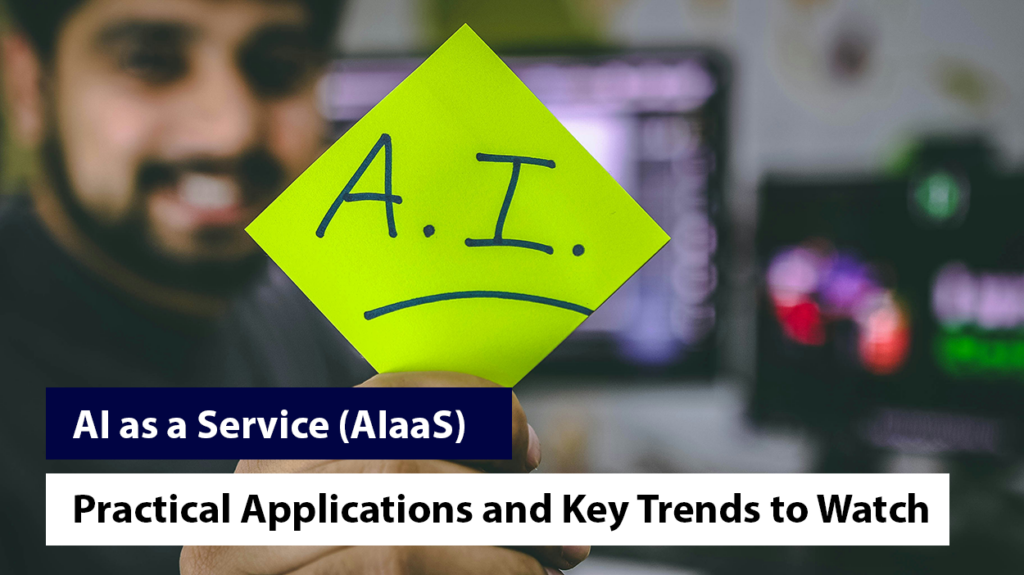
AI as a Service (AIaaS): Practical Applications and Key Trends to Watch
AI isn’t just for big tech companies with billion-dollar budgets and teams of data scientists. Agree?
Today, it allows anyone from a solo founder or a mid-size business to tap into the same tech used by Amazon or Google. Do you want smarter customer support or real-time insights? You can have it without writing a single algorithm or building models from scratch.
As, it is turning complex technology into plug-and-play power tools. It’s fast and affordable also already reshaping how businesses work in 2025.
In this guide, you’ll discover:-
- What is AIaaS?
- Real ways businesses are using it today
- Trends that could give you a serious competitive edge
If you’re not exploring it yet, you’re already a step behind the curve.
What Is AI as a Service (AIaaS)?
AI as a Service at its core means renting powerful AI tools through the cloud. It is like you’d use storage from Google Drive or stream movies on Netflix. You get ready-to-use capabilities like language processing and image recognition. Also, chatbots or predictive analytics that all delivered on demand eliminating the need to build models from scratch or hiring an AI team.
AIaaS platforms are designed to be plug-and-play. You access them via APIs, web interfaces, or SDKs, and only pay for what you use. It’s faster, cheaper, and a lot easier than traditional AI development.
Some popular AIaaS providers include:-
- OpenAI – for generative AI and natural language processing
- AWS AI/ML Services – for speech, vision, and forecasting tools
- Google Vertex AI – for training and deploying custom models
- Microsoft Azure AI – for scalable enterprise-grade AI workflows
AIaaS makes AI accessible without the complexity, whether you’re building a smarter customer experience or automating internal tasks analyzing data at scale.
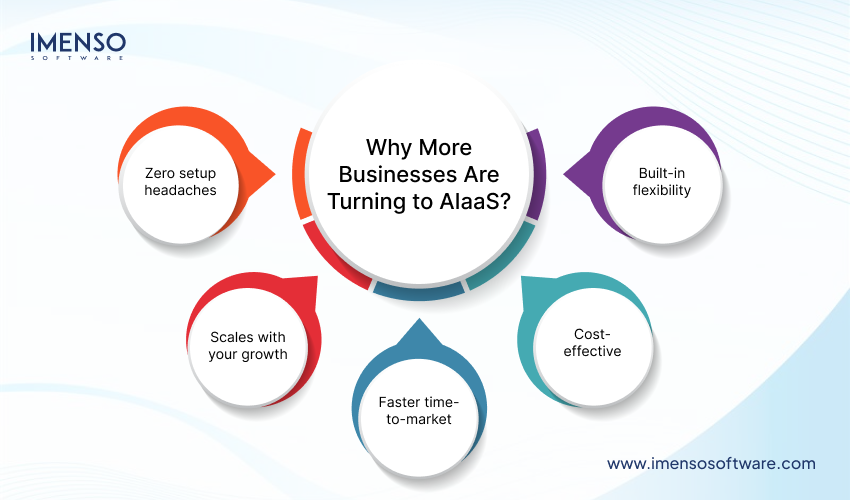
Why More Businesses Are Turning to AIaaS?
Let’s face it, AI used to be out of reach. It was expensive, complicated, and required a full team of experts to get anything off the ground. AIaaS has flipped that script.
Today, businesses of all sizes can now utilize powerful AI tools without encountering technical complexities. The best part is that you only pay for what you use.
Here’s why companies are loving AIaaS:
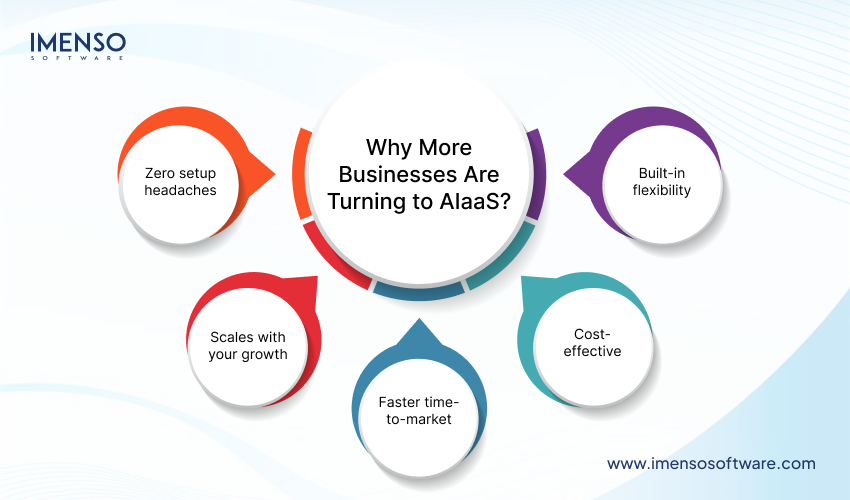
- Zero setup headaches
No infrastructure. No model training. Just plug it in and go. - Scales with your growth
You can easily manage your need AI for 100 users today and 10,000 tomorrow, it will be possible. - Faster time-to-market
Launch smart features in the weeks and not months. - Cost-effective
Forget million-dollar development as it is pay-as-you-go and worth every penny. - Built-in flexibility
You can test, tweak, and expand without being locked in from sentiment analysis to fraud detection.
This means getting to MVP faster for startups. It means transforming customer experiences and operations also decision-making without starting from scratch for enterprises.
Real-World Applications of AIaaS
AIaaS isn’t just buzz, it’s powering real and everyday experiences across industries. From chatbots that handle support tickets to systems that predict what your customer wants before they say a word. Here’s where AIaaS is making waves:-
- Smarter Customer Support
AI-powered chatbots and virtual assistants can handle FAQs and book appointments along with resolving issues. And even upsell all without human intervention. - Hyper-Personalized Recommendations
Think of Netflix and Amazon-style suggestions. This lets e-commerce and content also SaaS platforms deliver custom suggestion which can boost engagement and conversions. - Predictive Analytics for Business Decisions
This includes sales trends and user churn also inventory planning. It helps companies see what’s coming and act before it happens. - Fraud Detection and Risk Management
Banks, fintech, and insurance companies use AIaaS to catch suspicious patterns in real-time and protect users from fraud. - Healthcare Diagnostics and Imaging
AIaaS helps doctors analyze scans and detect anomalies also prioritize patient care faster and more accurately. - Automated Content Creation
From ad copy and blog outlines to product descriptions, yes, even what you’re reading now. AIaaS tools like ChatGPT are automating content creation at scale. - Voice and Image Recognition
Retailers, travel apps, and accessibility platforms use AIaaS to turn speech into actions or scan images for instant classification.
And that’s just the beginning. No matter the industry, there’s a good chance AIaaS is already solving the problems you’re trying to fix manually.
AIaaS vs MLaaS vs AutoML: What’s the Difference?
These three often get thrown around like they mean the same thing — but they don’t. Here’s a clear breakdown:
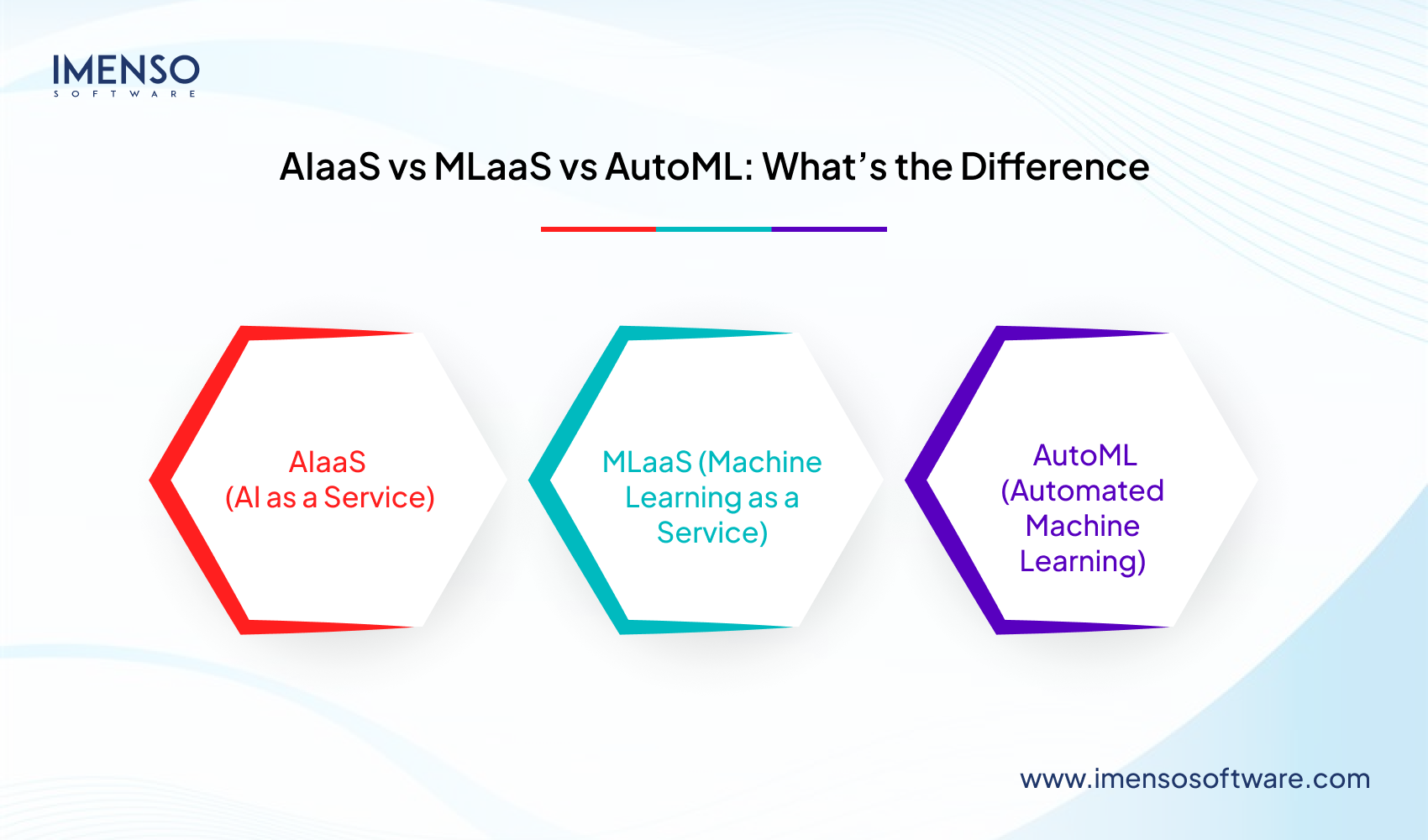
1. AIaaS (AI as a Service)
Complete AI capabilities are offered through cloud services. Think chatbots and language tools also vision APIs that are all ready to plug in.
- Best for: Businesses that want are done-for-you AI tools without managing the models
- Examples: OpenAI, Google Cloud AI, Azure AI, IBM Watson
2. MLaaS (Machine Learning as a Service)
Focuses more on the back end: data preprocessing, model training, and evaluation. You still need some data science know-how.
- Best for: Teams with technical chops who want to build custom models faster
- Examples: Amazon SageMaker, Databricks, Google Vertex AI
3. AutoML (Automated Machine Learning)
It provides tools that automate model selection and tuning also training. Great for non-experts who still want control over model behavior.
- Best for: Business analysts or developers who want to build models without coding from the beginning.
- Examples: H2O.ai and Google AutoML also Microsoft AutoML
Quick analogy:
- AIaaS is like ordering a meal.
- MLaaS is like buying ingredients and a recipe.
- AutoML is like a smart cooking robot that figures out the recipe for you.
Making AIaaS Work with Your Stack: Integration Capabilities
Using AIaaS isn’t just about having smart features; it’s about making those features work seamlessly with your existing tools. The real power of AIaaS shows up when it plugs directly into your CRM, ERP, website, or product without slowing anything down.
Here’s how companies are making it work:-
- Plug-and-Play APIs
The most AIaaS platforms offer robust and well-documented APIs. Call these AI features like text generation and image tagging or voice-to-text in minutes. - Pre-built Connectors
Platforms like Zapier and Make also Microsoft Power Automate let you link AI tools with apps like Slack and HubSpot with no need of dev team. - Embedded AI Features
Many SaaS tools now integrate AIaaS in the background. For example:-- Salesforce Einstein uses AIaaS to score leads.
- Notion AI uses OpenAI to summarize and write content.
- Shopify’s AI writes product descriptions automatically.y
- Custom Workflows
Want to send chatbot data to your analytics dashboard? Or connect a language model to your support center? AIaaS lets you build customized flows that actually reflect how your business works.
AIaaS doesn’t sit on the sidelines, it becomes part of your core system, quietly leveling up your user experience, automation, and decisions.
Security & Compliance in AIaaS: What You Can’t Ignore
AIaaS is powerful, but with great power comes… well, serious responsibility. When you’re handling sensitive data, whether it’s user messages or financial info, security isn’t optional.
Here’s what you need to know before plugging in that shiny AI service:-
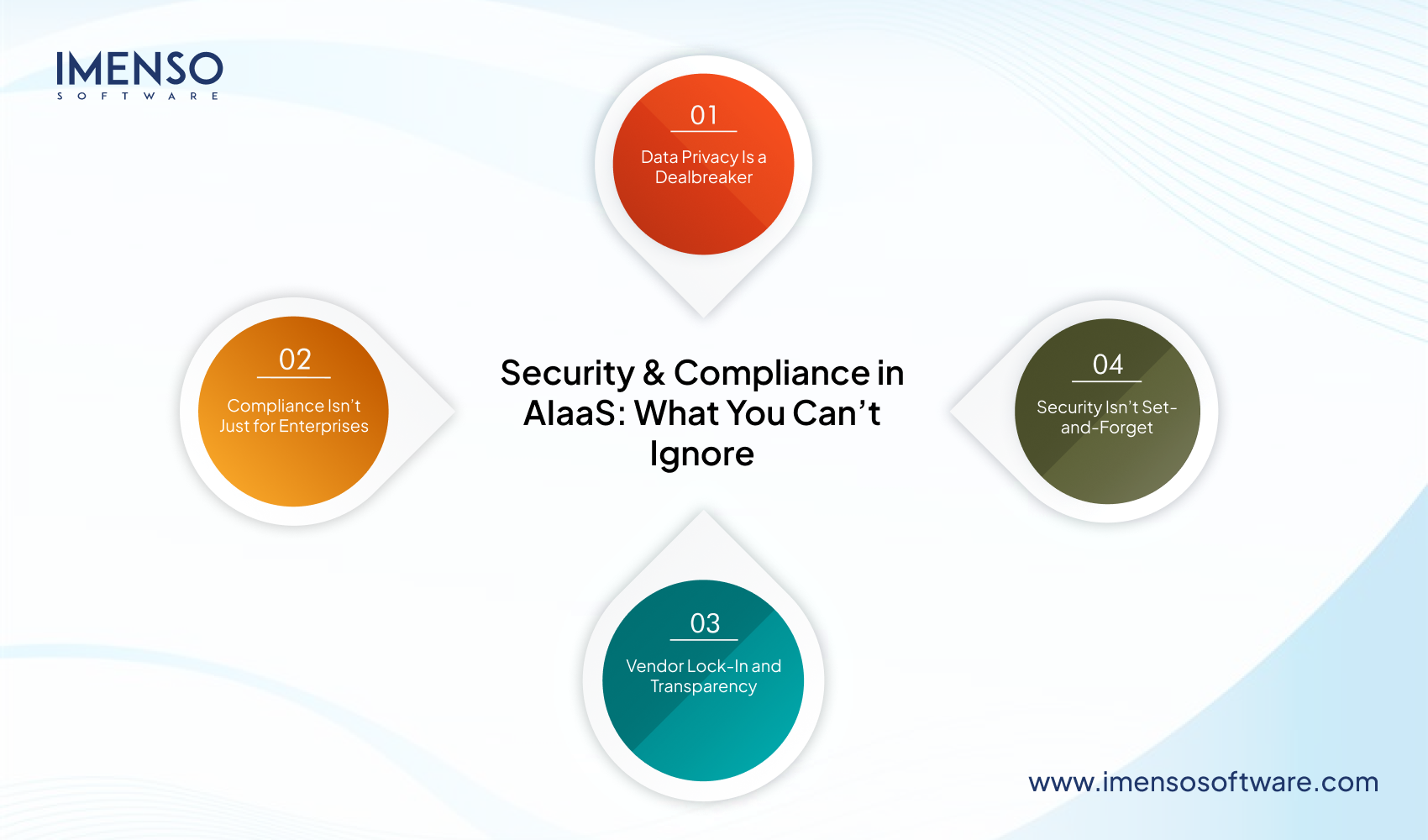
a. Data Privacy Is a Dealbreaker
AI tools process massive amounts of data, and sometimes, it’s your customer’s stuff.
You’ll want to ensure:-
- Data is encrypted in transit and at rest.
- Clear privacy policies are in place.
- Users can opt out or delete their data.
- You’re not violating GDPR, HIPAA, or other data laws.
b. Compliance Isn’t Just for Enterprises
Compliance builds trust and opens doors to more customers. No matter, you’re a startup or a global brand.
Some key frameworks include:-
- GDPR, if you handle EU users.
- HIPAA for health-related data.
- SOC 2 / ISO 27001 for B2B SaaS trust.
- CCPA for California residents.
c. Vendor Lock-In and Transparency
Some AIaaS platforms are black boxes. You feed them data and get a result but don’t know how the answer was made.
Before choosing a provider, ask:
- Can I export my data and leave if needed?
- Do they offer explainable AI options?
- How often are their models audited?
d. Security Isn’t Set-and-Forget
You’ll also need to:
- Run security audits regularly.
- Set up access controls.
- Monitor API usage anomalies.
- Back up critical data.
If your AIaaS platform isn’t secure, neither is your business. You can choose vendors that take security seriously and make it part of your process from day one.
Emerging Trends Shaping the Future of AIaaS
AIaaS isn’t just evolving, it’s accelerating. The way businesses use artificial intelligence today will look very different just a few years from now. These are the trends already reshaping the AIaaS landscape in 2025:-
a. Vertical AIaaS Is on the Rise
Generic AI tools are great, but specialized platforms are even better. Now we’re seeing solutions built just for healthcare and finance also education, and more complete with industry-specific data models and compliance baked in.
b. Low-Code & No-Code AI Tools
Want to build a smart chatbot or recommendation engine without touching code? Tools like Peltarion, Obviously. AI, and Microsoft Power Platform are putting AI into the hands of marketers, product teams, and solopreneurs.
c. Green AI & Energy Efficiency
The environmental footprint grows bigger with models. Providers are now optimizing for energy-efficient AI and carbon-neutral training along with sustainable model usage. This is a trend especially important for ESG-conscious brands.
d. Responsible & Explainable AI
It’s no longer enough for AI to be smart but it also has to be fair and transparent. Expect more demand for AIaaS platforms that include:
- Bias detection tools
- Explainable results
- Ethical guardrails
This isn’t just a “nice to have,” regulators and customers are both watching.
e. AI and Humans, Not AI vs. Humans
The smartest companies aren’t replacing people with AI, but they’re using AI to amplify human work. AIaaS is becoming the assistant you didn’t know you needed from drafting emails to summarizing reports.
These trends are already happening, and if your business can stay ahead of them, you’ll have an edge most competitors won’t see coming.
Is Your Business Ready for AIaaS?
Before you dive into integrating AI into your workflows, consider taking a step back. AIaaS is powerful and to make it works best you will have to make your business prepared for it.
Here’s a simple readiness checklist to help you figure out if now’s the right time:-
1. You’re drowning in repetitive tasks
Is your team spends too much time answering the same questions or sorting data and chasing manual reports? AIaaS can help automate all of it.
2. You already collect useful data
No data, no AI magic. If your business gathers customer info, behavior patterns, or transactional data, you’ve got fuel for smart AI tools.
3. You have a specific use case in mind
You should not adopt AI because it’s trendy. Have a clear goal like improving customer support or boosting conversions also speeding up decision-making.
4. Your team is open to experimenting
AI doesn’t have to be perfect on day one, but your team should be curious and flexible enough to test, tweak, and learn.
5. You’re ready to invest a little to gain a lot
Most AIaaS tools are cost-effective, but they’re not free. Be ready to budget for trials and integrations also initial learning curves.
Did you check 3 or more boxes? You will be ready to start exploring AIaaS, even a small first step can unlock serious gains in productivity and insights also user experience.
AIaaS Is Your Shortcut to Smarter Business
AI no longer belongs to Silicon Valley giants, it’s now a tool you can use to work smarter, move faster, and scale without burning out your team or your budget. And with AIaaS, you just need to plug in and start solving real problems.
Are running a startup or growing a SaaS product or leading innovation at an enterprise? Now’s the time to explore what AI as a Service can do for you.
FAQs
Q1: Is AIaaS only for big companies?
Not at all, it is designed to be flexible, startups, small businesses, and solo founders can all use it. Most platforms are pay-as-you-go which makes you only spend what you need.
Q2: Do I need a developer to use AIaaS?
Yes, it is helpful to an extend because many AIaaS tools offer no-code or low-code options. This allows non-tech teams can get started with simple automation or chatbots.
Q3: What’s the difference between AIaaS and traditional AI development?
Traditional AI requires hiring data scientists and managing infrastructure also building models from scratch. This gives you ready-to-use tools through the cloud. It is faster and cheaper also easier to scale.
Q4: How secure is AIaaS?
Top providers like AWS, Google, and Azure follow strict security protocols. These have encryption and compliance standards just make sure you choose a provider that fits your industry needs.
Q5: Can AIaaS tools be customized?
Yes, many platforms let you fine-tune models or add your data to improve accuracy. Some even offer custom training and API control.
Q6: How much does AIaaS cost?
The pricing usually varies by provider and usage. However, many tools start free or offer trial tiers. The costs usually depend on how many API calls you make or how much data you process.